Planning & Logistics

Civil or Symbolic Wedding in Italy?

Oct 18, 20245 min readPlanning & Logistics
Bride and groom exchanging rings at an intimate wedding ceremony in Italy.

The question arrives sooner or later — often not during a planning meeting, but in a quiet moment. Over dinner. On a flight. What follows is a more honest way to think it through.

A More Honest Way to Decide

Almost every couple arrives at this question sooner or later — often not during a planning meeting, but in a quiet moment. Over dinner. On a flight. Late at night, when the excitement settles and the practicalities surface.

“Should we legally marry in Italy… or just have a symbolic ceremony?”

It sounds like a logistical decision.

It rarely is.

Beneath it sits something more personal: what do you actually want that moment to represent?

Let’s Start With the Signature

For some couples, signing the official register in Italy matters deeply. There is something powerful about putting pen to paper inside a historic town hall — perhaps overlooking a lake or framed by centuries-old stone walls — and knowing that this is the moment it becomes legally real.

For others, the signature feels procedural. Necessary, perhaps. But not the emotional centre of the day.

If you imagine yourselves smiling at a municipal registrar, exchanging vows and signing in front of guests, then the civil route may feel complete. If, instead, you picture the ceremony as fluid, personal, and shaped entirely around your story, the legalities may feel like background noise.

Neither instinct is wrong. They simply lead in different directions.

The Part No One Romanticises: Paperwork

A civil wedding in Italy is entirely possible for foreign citizens. It is not mysterious or inaccessible.

But it is structured.

There are documents to prepare.

Translations to arrange.

Appointments to confirm.

Timelines to respect.

Some couples find reassurance in that structure. It feels official. Grounded. Certain.

Others realise, quietly, that they would rather invest their energy elsewhere — into the setting, the atmosphere, the way the ceremony unfolds.

A symbolic ceremony removes the administrative layer entirely. No formal documentation. No municipal scheduling. No external framework dictating how the moment should look.

For many international couples, that freedom changes everything.

Atmosphere Changes the Equation

Civil ceremonies must take place in authorised venues, at authorised times.

Symbolic ceremonies do not.

That difference is not merely technical — it is aesthetic.

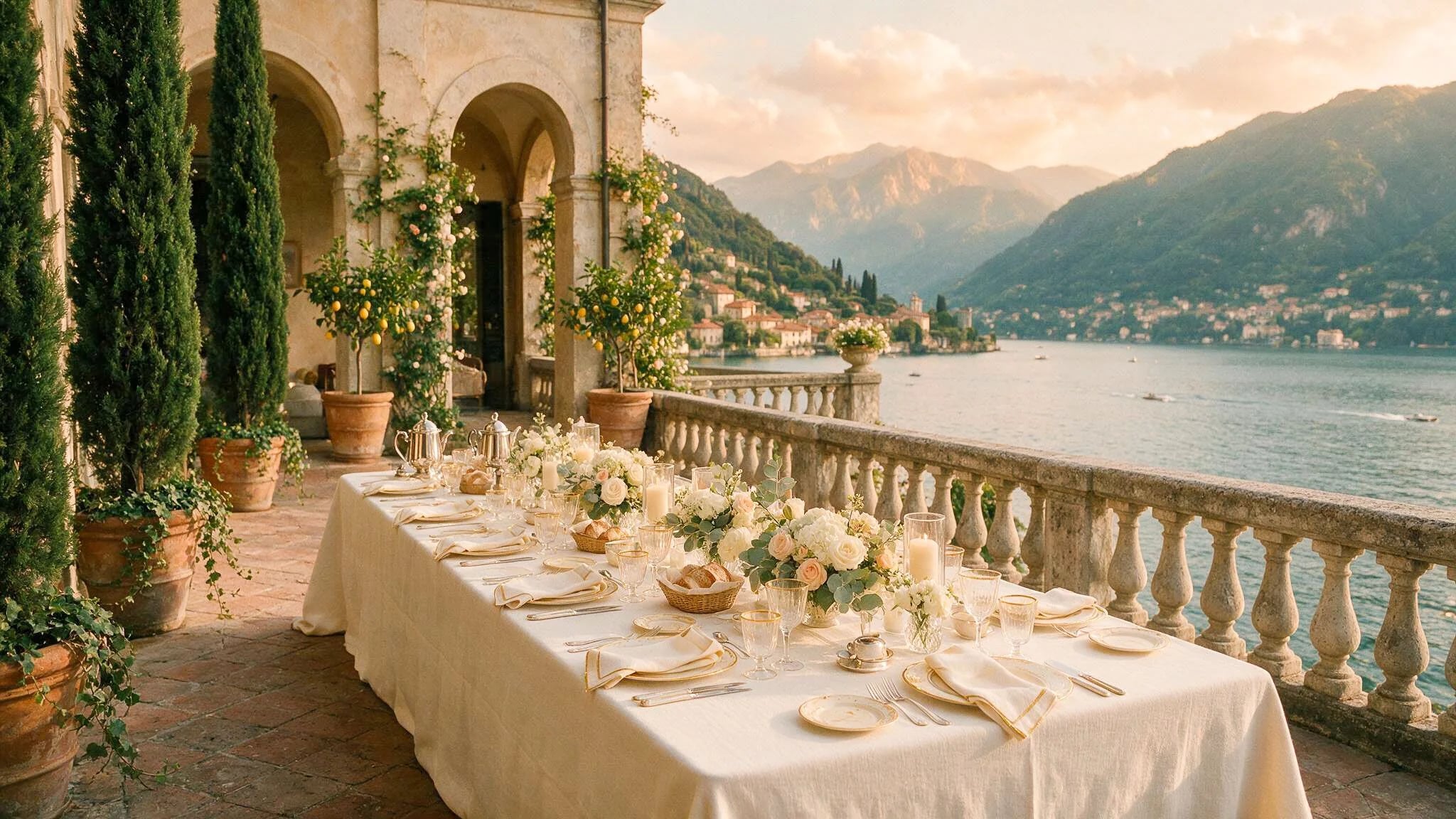
A symbolic ceremony can happen at sunset on a cliffside terrace. Beneath olive trees. In the courtyard of a private villa, where the air feels still and golden.

It can be officiated by someone you know. Or by someone chosen for their voice, their presence, their ability to hold a room without scripts.

When couples say they want “something that feels like us,” they are often describing this kind of freedom — even if they haven’t articulated it yet.

Of course, legality matters.

A civil marriage celebrated in Italy is generally recognised abroad, provided documentation is properly handled and registered.

Yet many couples take a different approach: they complete the legal process at home, in a brief and private civil appointment, and reserve Italy for the ceremony that carries emotional weight.

It is no less meaningful.

In fact, it often allows the Italian celebration to breathe.

The legal process for foreign couples marrying in Italy is more straightforward than it may seem — and entirely manageable with the right guidance.

A Question Worth Asking Yourself

Picture the moment clearly.

Do you want the signing witnessed?

Or would you prefer it to remain private — leaving the ceremony itself free from institutional formality?

Some couples feel empowered by the public legality of the act. Others prefer the ceremony to exist purely as an expression, without legal undertones shaping its rhythm.

There is no superior choice here. Only alignment.

When Civil Makes Sense

A civil wedding in Italy is a coherent choice if:

  • You want one singular, definitive moment that is both legal and ceremonial.
  • The idea of officially marrying in Italy carries symbolic importance for you.
  • You are comfortable navigating documentation and timelines.
  • You appreciate the structure that comes with institutional recognition.

It offers clarity. Finality. A certain gravitas.

When Symbolic Feels Truer

A symbolic ceremony often becomes the natural path when:

  • Creative freedom matters more than legal formality.
  • Your preferred venue is not licensed for civil weddings.
  • You wish to avoid international bureaucracy.
  • You want the ceremony to unfold entirely on your terms.

It is not a compromise.

It is a conscious design choice.

A symbolic ceremony, when designed with intention, can be one of the most personal things a couple creates together.

So — Which Is Right?

A civil wedding is a legal act.

A symbolic ceremony is an act of meaning.

Some couples want those two things to happen at the same time, in the same place.

Others prefer to separate them — to let the legalities remain quiet, and allow the celebration in Italy to exist as something unbound, deliberate, and deeply personal.

If you are unsure, ask yourselves one simple question:

When you look back in twenty years, what will you want to remember — the document, or the atmosphere?

That answer usually reveals everything.

← Back to Journal
Share

More from the Journal

Foreign couple signing the civil marriage register at a historic Italian town hall, officiated by a municipal mayor
Planning & Logistics

How to Get Legally Married in Italy as a Foreign Couple

Oct 31, 20244 min
Symbolic wedding ceremony in Italy, intimate outdoor setting at golden hour
Planning & Logistics

What Is a Symbolic Wedding in Italy?

Jun 26, 20244 min

Ready to begin?

Your Italian wedding starts
with a conversation.

Begin Your Inquiry