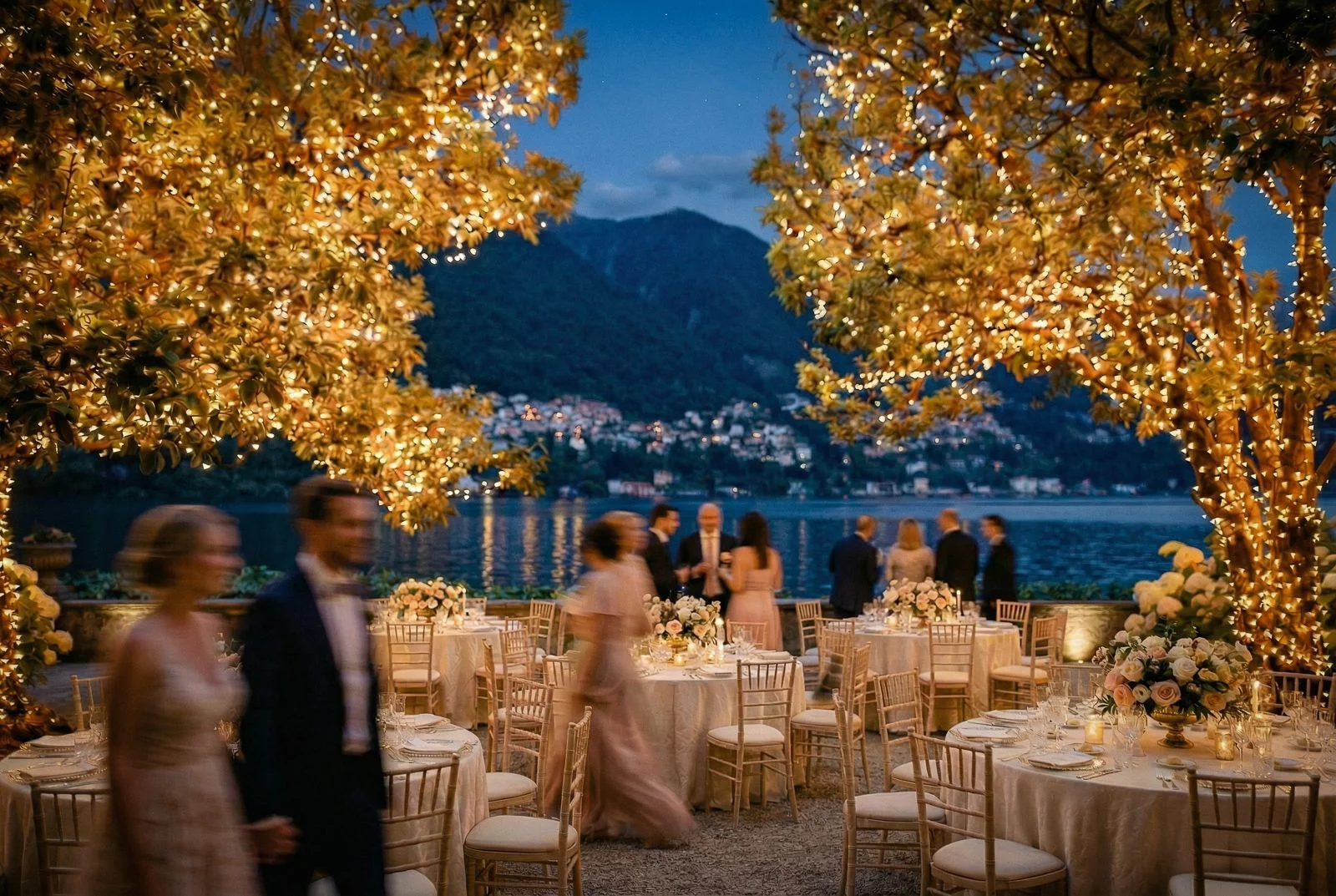
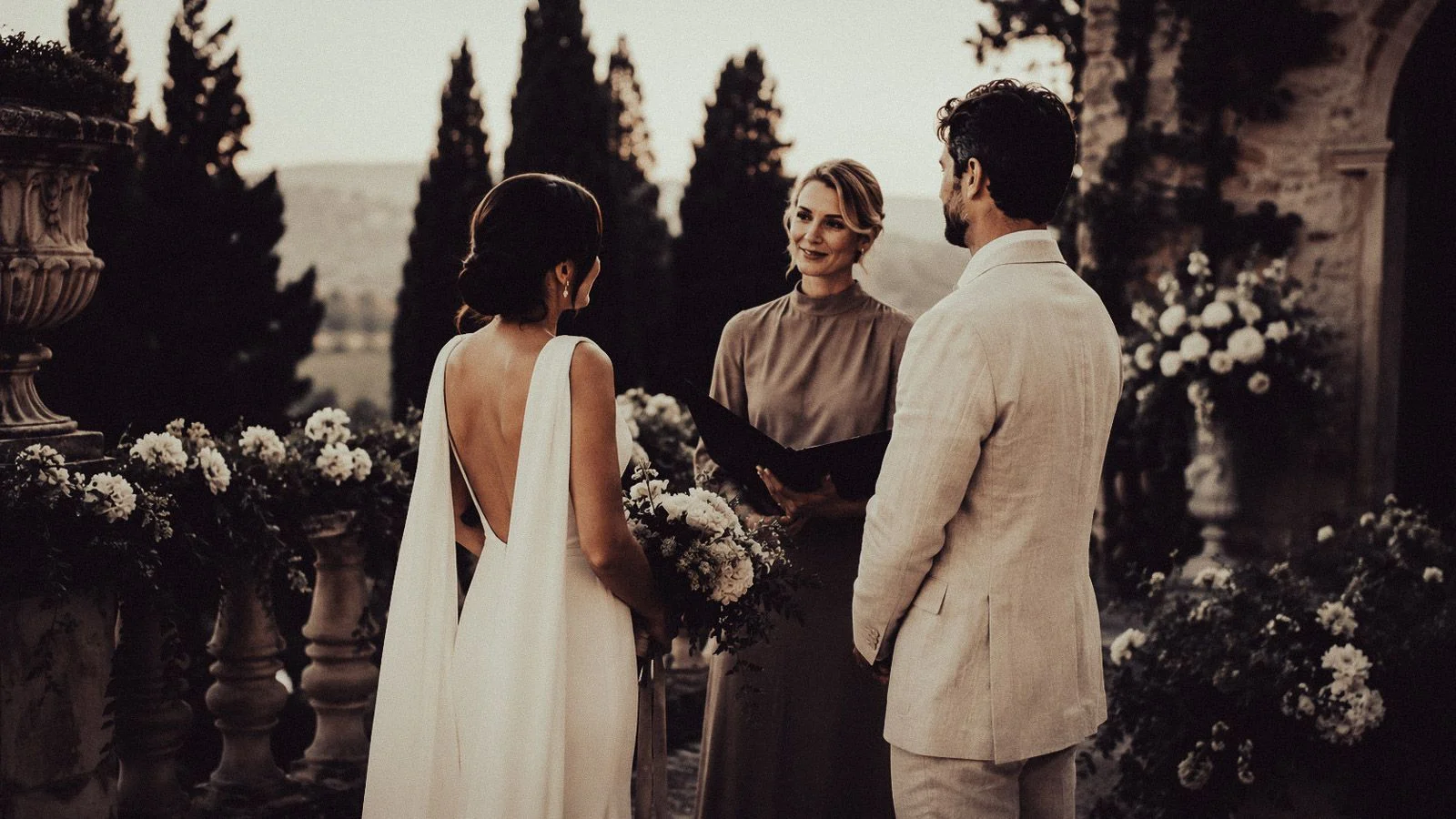
A symbolic wedding in Italy is a ceremony with no legal standing — and for many couples, that is precisely the point.
It is not registered with any municipality. It produces no official document. In the eyes of Italian law, it does not exist.
What it does produce is something harder to define: a moment shaped entirely around the two of you, in a place you chose, with words you wrote, officiated by someone who knows your story.
Not Less Than a Civil Wedding. Different.
The word "symbolic" can mislead. It suggests something approximate — a gesture toward marriage rather than the real thing.
That is not what this is.
A symbolic ceremony in Italy can be every bit as considered, as moving, and as memorable as a civil one. The difference is not in the emotional weight. It is in the administrative framework — or rather, the absence of one.
There are no required documents. No municipal appointments. No authorised venue lists. No external structure of any kind.
The ceremony looks exactly as you want it to look, because nothing else is dictating its form.
How Couples Typically Handle the Legal Side
Most couples who choose a symbolic ceremony in Italy are already legally married — or plan to marry legally in their home country before or after the Italian celebration.
A common approach: a quiet civil appointment at your local registry office a few weeks before the trip. Thirty minutes of paperwork. Then Italy, entirely yours.
Others prefer the reverse — they hold the symbolic ceremony in Italy first, and complete the legal process at home afterward. Both approaches are common. Neither diminishes the other.
Who Can Officiate?
Anyone.
There are no licensing requirements for officiating a symbolic ceremony in Italy. The role can be filled by a professional celebrant — someone trained to hold a ceremony with presence and intention — or by a close friend, a family member, or anyone the couple chooses.
Most couples opt for a professional celebrant for one simple reason: they want someone who can carry the ceremony without notes, without nerves, and without making it about themselves.
Is This Right for You?
If the idea of designing your ceremony without institutional constraints appeals to you — if you want to choose your location freely, write your own vows without a prescribed format, and let the day unfold entirely on your terms — a symbolic ceremony deserves serious consideration.
It is not a workaround. It is a deliberate choice, and one that suits a particular kind of couple very well.
For a deeper look at how symbolic and civil ceremonies compare — and how to decide which is right for your wedding in Italy — read our guide: Civil or Symbolic Wedding in Italy?
TGK Perspective
In my experience, the couples who choose a symbolic ceremony rarely arrive at that decision because it is easier. They arrive at it because, when they imagine the day clearly, the legal framework feels beside the point.
What they want is a ceremony that breathes. One where the location was chosen for how it feels at a certain hour, not because it appears on an approved list. Where the officiant was chosen for their voice and their warmth, not their municipal accreditation.
If that sounds familiar, you already have your answer.